-
Everything I'd read said take the lowest quote. My spreadsheet says otherwise.
-
Attachment chain: the hidden costs show up in the details
-
How I calculate total cost on a chain quote
-
Downtime is the real price tag
-
The same logic applies to linear actuators and stepper motors
-
Is there ever a case for the cheapest option?
I'd rather pay $200 more for a chain I can trust than explain a $5,000 production stop to our plant manager. That's not brand loyalty. It's arithmetic.
I manage procurement for a mid-sized packaging company. As of January 2025, our annual spend on power transmission parts is roughly $180,000, and over the past six years I've documented every order—every reorder, every emergency delivery, every “that shouldn't have failed” job ticket. I understand the pressure to cut upfront cost. But after watching that spend, I have a clear position: the lowest quote is the most expensive way to buy motion components.
Everything I'd read said take the lowest quote. My spreadsheet says otherwise.
Everything I'd read about procurement said to get three quotes and take the lowest compliant bid. In practice, after tracking 200+ orders, the lowest quote has cost us more in roughly 60% of the cases where we chose it. I didn't expect that.
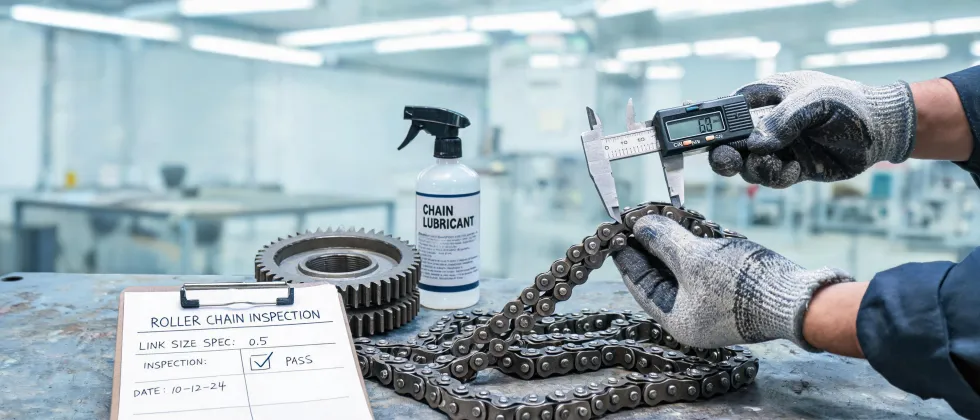
Take roller chain. When I audited our 2023 spending, a generic chain quote came in 18% lower than the Tsubaki roller chain quote. Maybe 16%—I'd have to check the spreadsheet. It looked identical on paper: same pitch, same width, same rated load. I almost approved it. Then I ran total cost of ownership.
The generic chain needed re-lubrication every two weeks and had no engineering support behind it. The Tsubaki chain included a lubrication spec, dimensional data, and a local distributor who answered the phone when I had a question. (Which, honestly, is worth more than the price difference.) The cheap option wasn't actually cheap—it was a maintenance liability with a lower sticker price.
Attachment chain: the hidden costs show up in the details
We run Tsubaki attachment chain on three conveyor lines. In Q2 2024, I compared it against a cheaper attachment chain from another vendor. The saving looked real: about $400 per line. But when the first cheaper chain arrived, the attachment spacing was slightly off. The conveyor lugs didn't align. We spent a full shift cutting and shimming before giving up.
That $400 saving turned into a $1,100 problem, plus a schedule delay. If I remember correctly, the rework cost was closer to $1,400 after we replaced the lugs too. The point isn't that the other chain was defective. It might have met its own spec. It just didn't meet the application spec. And I didn't find that out until I'd already paid for it.
How I calculate total cost on a chain quote
I built a cost calculator after getting burned twice on hidden fees. It doesn't need to be complicated. For each quote, I estimate:
- Purchase price and shipping.
- Expected service life in our application.
- Labor cost per replacement, including the production loss.
- Maintenance tasks the chain requires over its life.
- Support and documentation—can I get dimensional data and load ratings without chasing someone?
I also check whether the seller gives me a clear standard reference. A chain that says “interchangeable with” may not share the same tolerance, load rating, or attachment dimensions. I want the relevant ISO or ANSI designation on the datasheet. If it's missing, that's a red flag.
When I plug those numbers in, the “cheap” chain often loses. Not because it's bad, but because the cost per installed hour is higher.
Downtime is the real price tag
Our production line runs three shifts. A stalled conveyor costs us around $620 per hour in lost output—before we count damage to product that was sitting on the line when it stopped.
That's why we switched to the Tsubaki Titan chain in our most abrasive section: the one near the washdown area, where grit and moisture killed standard chain quickly. The Titan chain cost more upfront. I want to say it lasted about 18 months versus 6 months for the standard chain, but don't quote me on the exact figures. The pattern was clear: cheaper per hour of service, fewer emergency calls, fewer conveyor stops.
Even after approving the Titan chain order, I second-guessed it. What if the extra cost didn't pay off? The first few weeks were stressful. Then our maintenance team stopped reporting the usual “chain stretched” failures. That's when I relaxed.
The same logic applies to linear actuators and stepper motors
This isn't just about chain. When we evaluated linear actuator control for a new bagging line, the cheapest option was an electric actuator rotary unit with a friendly price tag. It looked like a plug-and-play solution. It wasn't.
The base quote didn't include the motor driver. The dealer's “free setup” offer actually cost us $450 more in hidden fees once they got on-site. Oh, and the actuator's control software didn't support our PLC protocol—a fact buried in the manual. We ended up swapping it out. The extra $800 we could have spent on an integrated system would've saved us about $1,200 in rework and a week of engineering time.
And every time a new engineer asks “what's a stepper motor”, I understand. It's a legitimate question. But the generic answer from an online forum won't tell you whether the motor has enough holding torque for your load, or whether the driver is compatible with your controller. Stepper motor selection is not a beginner project.
Is there ever a case for the cheapest option?
To be fair, if the application is non-critical, the load is light, you have a spare on the shelf, and your team can swap a component in 20 minutes, maybe a cheaper part makes sense. I get why people choose the cheapest option—budgets are real, and not every line is a critical path.
But for anything that feeds the main line, I'd rather pay a documented premium than absorb an undocumented penalty. My procurement policy now says: quotes from three vendors, but the decision is based on total cost, not sticker price. That policy has saved us more money than any “lowest price” wins ever did.
This may sound like a simple idea. But it's hard to keep when the quarterly budget review comes and someone asks why I spent $2,000 more on chain. The answer is in the downtime log: fewer stops, fewer overtime repairs, fewer rush orders. The savings show up in a different column.
When I need specs, I go to the tsubaki-chain catalog before I call a distributor. I also keep the linear actuator control guide and a stepper motor sizing reference in my bookmarks. That's not marketing fluff. It's data I can use in a cost calculation—and in my experience, data beats guesses every time.