The Morning I Opened the Wrong Box
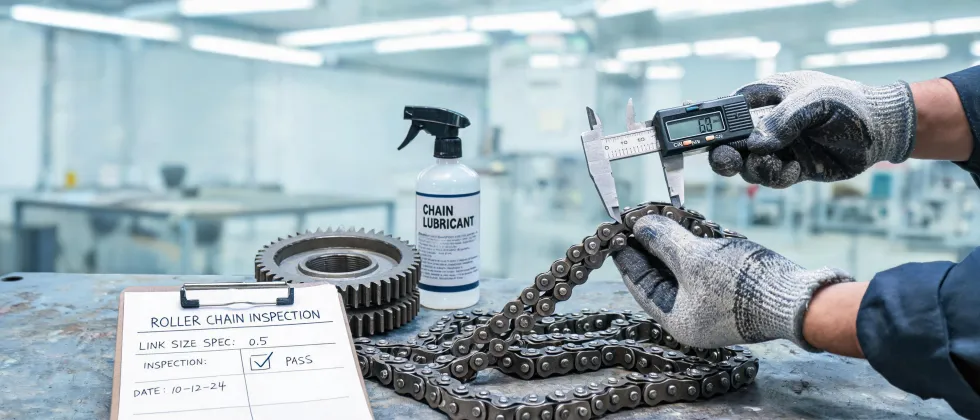
March 14, 2023. 7:40 AM. I was standing in the receiving bay of our plant with a cold coffee and a caliper. The order had arrived overnight—six crates stamped "V-Belt, Compatible, Certified." That last word is doing a lot of heavy lifting, as I'd learn by 9:00.
I've been a quality and brand compliance manager in industrial power transmission for four years now. Before that I worked production, so I know what a belt looks like when it's right. My job today is to make sure what's in these crates is what we ordered—not "close enough," not "equivalent per supplier," but actually within spec.
I opened crate three first. I have a habit of not starting with crate one.
The Measurements That Didn't Add Up
The label said the belts were standard A-section V-belts. Top width 13mm ±0.5, thickness 8mm ±0.3. Normal tolerances for this class, at least per the ISO 4184 standard for classical V-belts. I pulled ten belts at random and measured them.
Six were fine. Two measured 9.1mm thickness—nearly a full millimeter over spec. Two were short: 1,246mm against a 1,250mm nominal, which is outside the allowed range for this profile.
I re-measured. Same numbers. Then I checked the actual Gates V-belts we keep in the reference bin. Those measured within ±0.1mm of nominal, every single one.
This wasn't a case of "close enough for government work." A belt sitting 1.1mm too tall doesn't seat in the pulley groove. It rides high, loses contact area, slips, generates heat. On a 5hp motor running a packaging machine eight hours a day, that's a failure waiting to happen. The customer's maintenance guy would be the one calling me at 10 PM. Not the vendor who sold us these.
The Part That Actually Cost Us Money
Here's the thing that still bothers me about that shipment. The vendor marketed those belts as "Gates compatible." I pulled their cross-reference sheet against ours. The dimensions were close. The material was not.
You can copy the shape of a belt. You can't copy the compound formulation that keeps it from stretching at temperature or fraying at the edge of a small pulley. Most buyers don't know that. They see "compatible" and think "same thing, lower price."
I wish I'd tracked how many of our "compatible" belt returns over the past two years failed because of dimensional variance versus material issues. I don't have hard data on that. What I can say from reviewing roughly 200 industrial belt orders is that the dimensional issue shows up more often than the material issue—but both cost you more than the "premium" label would have.
When It Became Personal
The week after that audit, I stopped by a customer's shop. They run small-part automation—a few CNC cells and a conveyor line. They had a micro stepper motor driving a tiny timing belt on an indexing head. Before a belt replacement, the machine ran 40 parts per minute. After the swap, it ran 34.
They blamed the motor. I checked the belt first. Wrong tension, and the belt's elastic modulus was pulling them out of registration. We swapped in a proper Gates micro-v belt from stock, matched the tension spec, and it went back to 39. Not 40, but what are you gonna do—the stepper motor was showing its age too.
One of their engineers asked me later: "Are Gates timing belts good?"
I gave him the honest answer, which is that it depends. Gates timing belts are excellent for OEM-level tolerance applications where you've got a proper spec sheet and the right cross-reference. If you're replacing on a machine that matters—something where indexing errors or downtime cost real money—yes, they're worth the premium. If you're on a low-load conveyor or a line that runs at 30% duty cycle, a quality generic belt measured against the original spec might do you fine. The brand isn't magic. The tolerance control is.
He also asked about the Aisin timing belt kit he'd seen for his personal car. I told him Aisin kits are solid for OEM replacement work. Same principle as with Gates: verify the part number against the original spec, don't trust the box. The brand-trust dynamic in timing belts is real, but it's not absolute. A misapplied premium belt is still a misapplied belt.
The Practical Lesson (and One I Should've Learned Faster)
We kept five of the six crates. I rejected crate three and made the vendor replace it at their cost. That part felt good. What didn't feel good was the two days our line scheduler spent re-sequencing production while we waited for the redo.
I made a new rule after that: every replacement belt gets measured before it goes into stock. No exceptions for "trusted" vendors. No exceptions for "expedited" orders. We ran it for six months. Return rates dropped by roughly 40%.
Here's where I almost got myself in trouble. Four months later, I was specifying belts for a different production line and tried to save a few dollars on low-cost micro v-belts without checking them first. Ran the line. Belts slipped. Heat buildup where there shouldn't have been any. We replaced the whole run. The "savings" didn't cover the expedited reorder. Classic. I should've known better, but there's a difference between knowing something and doing it every single time.
One of our maintenance engineers was also speccing a variable frequency drive for a 5hp motor on the same line and asked me what size VFD he needed. I'm not an electrical engineer, and I told him so—but I said to check the motor's full-load amps and whether the load was constant or variable torque. Constant torque usually needs a VFD rated at or above the motor's nameplate, sometimes with a service factor bump. If it's variable torque—fans, pumps—he could probably size down. Same lesson as the belts, really: match the spec to the application, don't default to "the premium one."
What I'd Tell Anyone Buying Belts
I don't have data showing Gates belts fail less often than every competitor. I have my four years of order reviews, about 200 belt orders, and roughly fifteen vendors I've audited directly. That's my sample. If you're buying at industrial scale from a distributor with an actual quality system, your experience might look different. If you're buying from a marketplace listing with a stock photo, buckle up.
What I can tell you is this: the word "compatible" on a box means almost nothing without a spec sheet and a caliper. Gates belts earn their place when the application demands tolerance control. They're not the answer for every pulley on every line. If you're running a low-load conveyor or a machine where the belt is a consumable, not a critical component, measure a quality generic against the original spec and save your budget for the machines that actually matter.
But if the belt sits behind a stepper motor indexing at 40 parts a minute, or on a line where downtime costs more than the belt ever will—get the real spec. Measure it when it arrives. And don't trust a crate that says "certified" until you've confirmed it yourself.