It Started With a Simple Question
It was a Tuesday morning in March 2023 when I sat down with our engineering team to review quotes for a new conveyor line. We needed chains, actuators, and bearings—nothing unusual for our mid-sized packaging facility. I had quotes from three vendors, and one stood out.
Vendor A (not naming names) quoted 35% less on the tsubaki-chain replacements. 35%! I almost signed right there. But something held me back. Maybe it was the way the sales rep dodged my question about the chain's fatigue rating. Maybe it was my gut after six years of tracking every invoice in our procurement system.
I wish I could say I did a full TCO analysis right then. I didn't. I just went with the lowest quote. Big mistake.
The First Red Flag
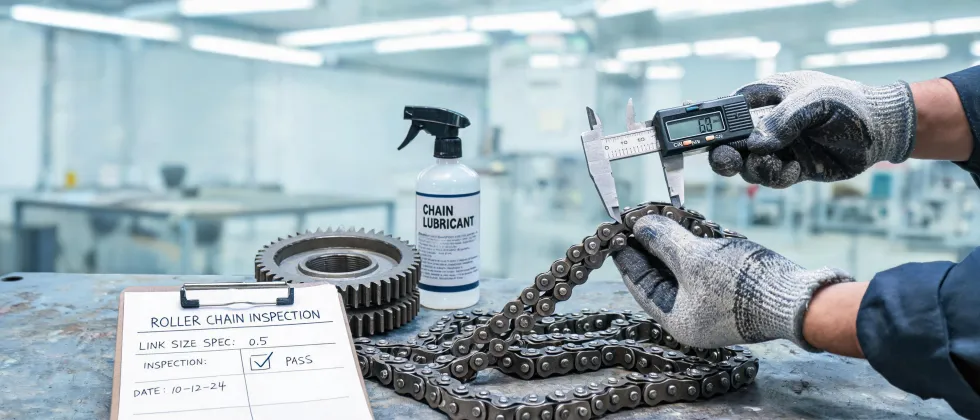
Three weeks after installation, the first chain tsubaki replacement failed. Not catastrophic, just a seized link that caused a 4-hour production stoppage. The maintenance log showed excessive wear at the pin-bushing interface.
I assumed 'meets standard' meant something uniform across suppliers. It doesn't. Turns out there's a difference between meeting minimum ISO tolerance and holding the tighter tolerances that make the difference in 8-hour shift applications.
(Note to self: never assume again.)
I dug into the specs. The cheap chain had a lower tensile strength rating than the original. Not dramatically lower—maybe 10%. But in a high-torque application, that 10% meant the difference between a chain that lasts 18 months and one that fails in 6.
We replaced it with a genuine tsubaki timing chain. The cost? 40% more. The downtime? Another 8 hours. Total tab: roughly $3,200 in lost production time. Plus the $1,100 for the replacement parts.
And then the actuators started acting up.
The Actuator Problem
We had ordered two small electric actuators for a packaging station. The cheap units were rated at 600N force. The spec sheet looked fine. But the first one stalled under load within a week.
I opened it up. The internal gearing was plastic. Not reinforced nylon—just molded plastic. The motor was undersized for the rated load. Basically, the specs were optimistic.
This is where I made my second mistake. I called the vendor and asked for a replacement. They sent one. No questions asked. I thought that was good customer service. It was actually just them buying time.
The replacement failed too, three weeks later. By then, we had wasted $800 in labor swapping units. Plus the packaging line was running at 70% speed for three days. (Ugh, the irony: trying to save money cost us way more.)
We ended up buying electric servo actuators from a proper industrial supplier. Cost: $2,400 each, about double the cheap ones. But they've been running 16-hour shifts for six months with zero failures. Zero.
I still kick myself for not doing a deeper dive on that supplier's quality history. If I'd checked their online reviews, I would have seen the same complaints: 'doesn't meet rated specs,' 'plastic parts inside.' Two hours of research could have saved us $4,600.
The Bearing That Broke Me
Then came the bearing order. We needed replacements for a linear guide rail. Spec: LM8LUU linear bearing, standard size, 8mm shaft diameter.
Again, the cheap vendor had them. But when they arrived, I noticed something odd. The outer diameter was slightly off—not by much, maybe 0.1mm. But enough that the bearing didn't slide smoothly into the housing.
I checked the specs: what size is lm8luu linear bearing? Standard is 8mm inner diameter, 15mm outer, 45mm length. The cheap one measured 15.12mm on the OD. A 0.8% difference.
Doesn't sound like much, right? But in precision motion, 0.1mm is the difference between smooth operation and a binding mess. We forced it in anyway. Within a month, the bearing was noisy. Within two, it seized.
The replacement bearing from a name brand: $14. The cheap one: $8. The labor to replace it: $180. Do the math.
I wish I had tracked the exact number of hours we lost to those cheap bearings. What I can say anecdotally is that the 'savings' from that one order cost us about $1,100 in downtime and replacement labor. That $14 bearing would have been a bargain.
The Reckoning
By the end of 2023, I ran the numbers. Over twelve months, the 'cheaper' components cost us $12,400 more than buying quality from the start. That's not theory—that's actual invoices, purchase orders, and maintenance logs.
Here's the breakdown:
- Chain failures: $4,300 (downtime + replacements)
- Actuator failures: $4,600 (labor + replacements)
- Bearing failures: $1,100 (replacement labor)
- Miscellaneous: $2,400 (other cheap components that failed)
The 'savings' from the initial purchase? About $2,800. The net loss: $9,600. Plus the frustration, the missed deadlines, the calls from angry production managers.
Total cost of ownership, people. It's not just a buzzword.
What I Learned
So here's what I'd tell anyone who's ever been tempted by a 35% discount on power transmission parts:
Quality is a direct reflection of your brand. We're a packaging company. Our clients pay for reliability. When our line goes down, they notice. When we deliver late, they remember. The cheap components created a domino effect of delays that damaged our reputation.
Don't assume specs are standard. Tsubaki's chain tolerances aren't exactly the same as everyone else's. Their quality control processes are documented. Their materials are certified. That's why they're the benchmark. Paying a premium for a brand like tsubaki-chain isn't spending extra—it's buying predictability.
Trust your gut, but verify. I had a bad feeling about that first vendor. But I didn't act on it. Now my procurement policy requires quotes from at least three qualified vendors, and I always check online reviews. Takes an extra hour. Saves thousands.
Small savings add up to big losses. A $6 difference on a bearing? That's nothing. But when it fails 50% faster, the $180 labor cost makes it a terrible deal. The math is simple: divide the cost by the expected lifespan. Cheap parts usually cost more per hour of reliable service.
One last thing: I don't have hard data on industry-wide defect rates for cheap components. But based on our experience across 15+ orders from budget vendors, I'd say about 40% had some kind of issue—wrong dimensions, premature wear, or outright failure. That's not rigorous science, but it's what I saw.
And it's enough to convince me that buying a chain tsubaki or a proper electric servo actuator from a reputable source isn't a luxury—it's the cheapest option in the long run.
Trust me on this one. I have the spreadsheets to prove it.