The Shortcut That Costs You Time (and Money)
So you need a replacement chain, a linear actuator, or a coupling. And you need it fast. Like, yesterday fast. In my role coordinating emergency orders for industrial clients, I see the same mistake over and over: people grab the first spec that looks close enough. Then the part doesn't fit, or it fails in a week, and they're back in the same spot, only now they've lost a day or three.
The truth is, there's no single "best" part for every urgent situation. It depends entirely on what you're trying to solve.
Let me break it down into three common scenarios I've encountered. Figuring out which one you're in is the real trick.
Scenario A: The Application Demands Precision & Load
This is the most straightforward situation. You have a piece of equipment that's down, and the failed component has a clear spec. An engineer has already done the math. You just need the right part, verified.
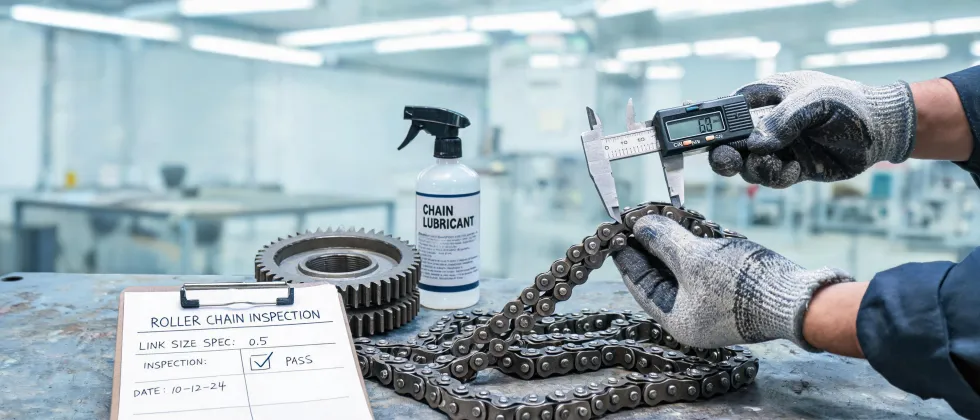
For this, don't guess. Start with a tsubaki chain configurator or an equivalent tool from a reputable brand. These tools aren't just fancy catalogs; they enforce selection rules. I can't tell you how many times I've seen someone buy a "similar" roller chain based on pin diameter alone, only to discover the tensile strength was 15% lower. The part worked for a week, then snapped. A $50 chain caused a $5,000 downtime event.
If you're replacing something like a dc linear actuator, the voltage, stroke length, and dynamic load rating aren't negotiable. Pull the part number from the old unit or the manual. If you don't have it, measure everything. We processed 47 rush orders last quarter alone, and the ones that went smoothly all had one thing in common: the customer had the exact spec.
The lesson: When the application is critical, precision beats speed. Use the configurator. Verify the datasheet. Then order the rush.
Scenario B: The Budget is Tight (But the Timeline Isn't)
This is the oddball scenario that trips most people up. Sometimes, the deadline isn't a *real* deadline. The machine is down, but there's a backup. The project has some flexibility. In these cases, the local supplier with a $400 markup on a standard bearing might not be the best move.
Honestly, I only learned this lesson after ignoring it. We were in a pinch for a linear electric actuator for a custom rig. The client wanted it in two days. The only option for that turnaround was a specialty vendor with a premium. We paid over $200 extra for a part we could have gotten in 5 days for standard pricing. The project didn't actually need that 2-day timeline—it was just what the client *said* they wanted. We lost $200 for nothing.
Now, I ask a different question: What happens if it arrives in 5 days instead of 2? If the answer is "nothing catastrophic," then budget for the standard delivery and avoid the premium. The $200 we wasted could have bought a nice set of new tools.
The lesson: Don't assume every request for "urgent" is a real emergency. Sometimes, the cheapest path is the one that gives you a few extra days.
Scenario C: The Real Emergency (When You Pay for Certainty)
This is the scenario where my experience really kicks in. The plant floor is silent. A client has a massive penalty clause for downtime. Or, like I saw in March 2024, a client's order arrived with a critical error (wrong keyway) a day before a scheduled shutdown.
In this situation, you are not shopping for a good price. You are buying delivery certainty. A $100 part with a guaranteed 8-hour delivery is infinitely better than an $80 part that *might* arrive in 24 hours, even if the $80 part is from a brand you trust.
The most frustrating part of this: you can't always predict it. We had three clients hit us with simultaneous emergency calls during our busiest season last year. For one, we needed a specific coupling that only one supplier had in stock. We paid an $800 priority handling fee on top of the normal cost. But the alternative was a $12,000 project delay for them. The math was simple.
For these situations, don't waste time on general searches. Go directly to a distributor or manufacturer with a known track record for rapid response. Ask specific questions: "Can you guarantee a 4 PM pickup today?" If they hesitate, call the next one.
The lesson: In a true emergency, the premium isn't for the part. It's for the guarantee that the part *will* be there.
How to Decide Which Scenario You're In
The hardest part is honestly assessing your own situation. Here's a quick decision tree I use:
- Is the equipment down, causing production loss right now? If yes, you're in Scenario C. Go for guaranteed delivery.
If no, proceed. - Is the part for a new design or a critical replacement where specs can't be changed? If yes, you're in Scenario A. Use the configurator or verify the spec.
If no, proceed. - Is there a buffer of more than 48 hours before the failure causes a real problem? If yes, you're in Scenario B. Take a breath and look for the best price/lead time balance.
If no, you're likely in Scenario C.
I can only speak to domestic urgent orders. If you're managing international logistics or dealing with thermal expansion in a high-heat environment, the calculus changes. But for 90% of the rush jobs I've handled, this framework works.
The bottom line: stop treating all urgent orders the same. The cost of the part is rarely the biggest factor. The cost of getting it wrong—or too late—almost always is.